
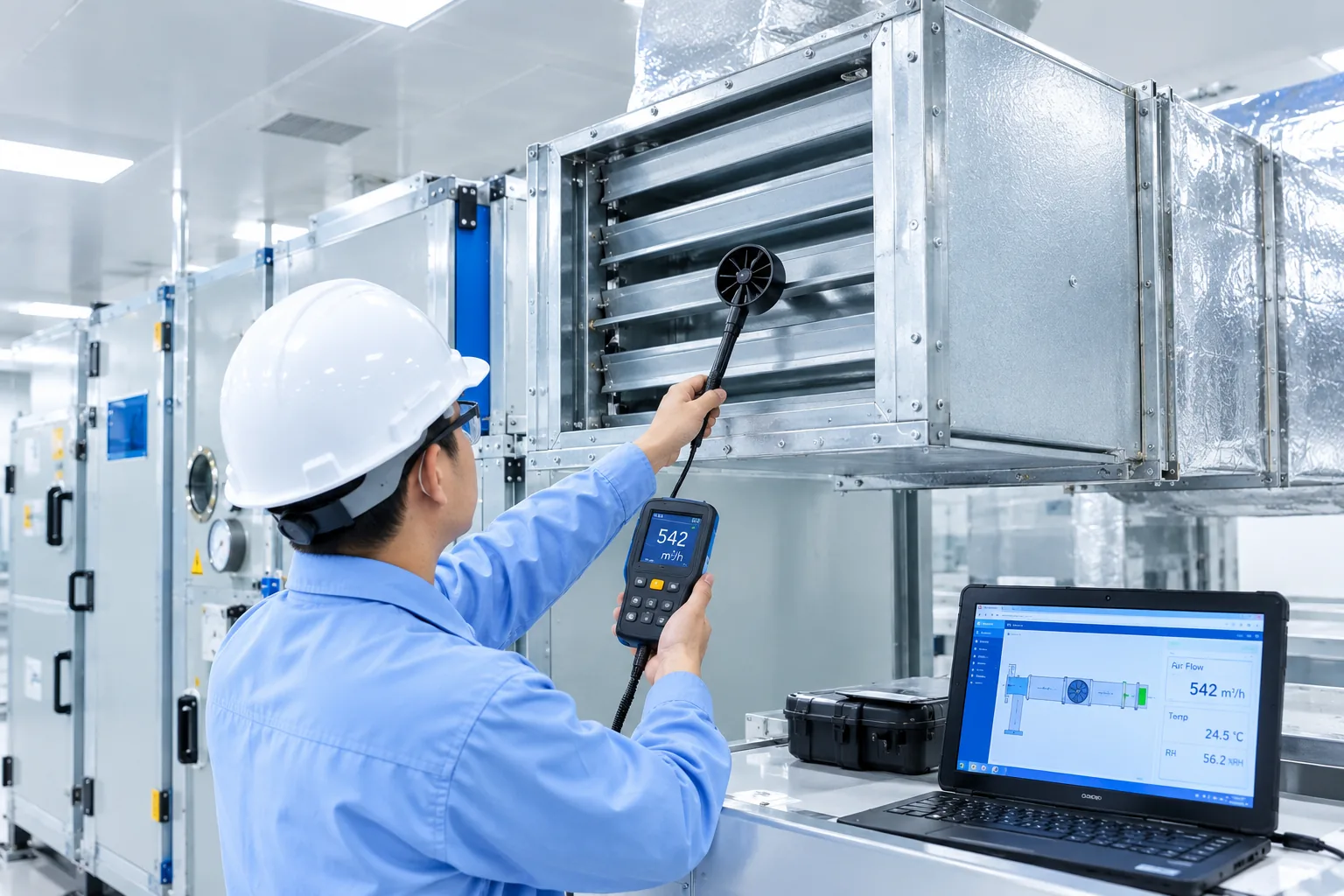
In a cleanroom HVAC system, correct design and complete installation alone do not guarantee effective operation. TAB (Testing, Adjusting & Balancing) is the process of testing, adjusting and balancing the system so actual airflow meets or aligns with its design values.
What does TAB include?
TAB typically focuses on:
- Testing: Measuring airflow, velocity and system parameters.
- Adjusting: Adjusting dampers or fan speed.
- Balancing: Balancing airflow between rooms and zones.
Technicians measure airflow at each supply and return terminal, compare it with design values and make the necessary adjustments.
Why is air balancing necessary?
- Maintain cleanroom pressure differentials
Supply and return airflow must be balanced appropriately to maintain pressure differentials between areas, limiting reverse airflow from less-clean areas into cleaner areas. - Deliver enough clean air
If airflow is too low, the room may not receive enough clean air, affecting particle and cleanliness control. - Maintain stable environmental conditions
Appropriate airflow helps control temperature and humidity inside the room. - Avoid wasted energy
Excessive airflow requires greater fan power, increases electricity use and may cause unnecessary noise. - Verify operation against the design
TAB confirms that the installed HVAC system distributes air in line with the design requirements.
Basic TAB process
Measure airflow → Compare with design → Adjust → Balance → Retest → Report
👉 In practical terms: TAB is the “fine-tuning of the HVAC system”. Air must do more than circulate: it must reach the right volume, direction and area, helping the cleanroom maintain a stable environment that meets operating requirements.